In the fifth volume of Dr. Livingston's Anatomy Jigsaw Puzzles, you’ll assemble an accurate cross-cut section of the left upper arm and forearm that gives you a detailed interior view from clavicle to finger’s distal phalanx. Focusing on the skeletal structure, this puzzle shows how the humerus, ulna, and radius bones are oriented. See the contours of the shoulder’s ball-and-socket joint down to the fingers’ many hinge joints. The carpal and metacarpal bones provide us amazing manual dexterity and pincer grip. Veins and arteries are interwoven, carrying vital oxygenated blood and removing deoxygenated blood. When finished assembling these exquisite pieces, you will be in awe of your accomplishment and your body’s complexity.
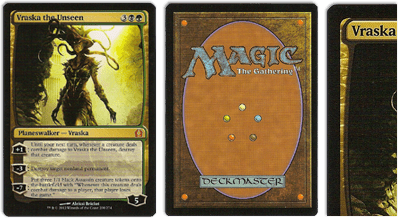
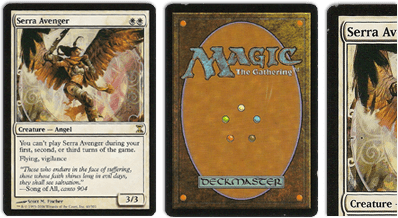
Near Mint condition cards show minimal or no wear from play or handling and will have an unmarked surface, crisp corners, and otherwise pristine edges outside of minimal handling. Near Mint condition cards appear 'fresh out of the pack,' with edges and surfaces virtually free from all flaws. '
'
'
'
Lightly Played (LP)'
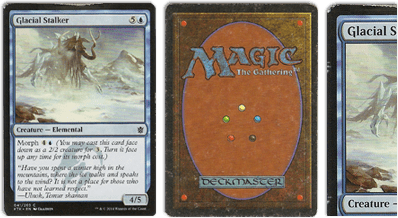
Lightly Played condition cards can have slight border or corner wear, or possibly minor scratches. No major defects are present, and there are less than 4 total flaws on the card. Lightly Played condition foils may have slight fading or indications of wear on the card face. '
'
'
'
Moderately Played (MP)'
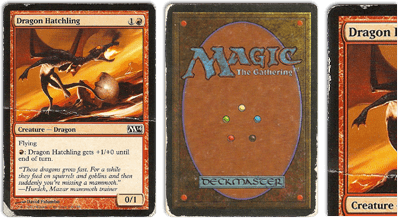
Moderately Played condition cards have moderate wear, or flaws apparent to the naked eye. Moderately Played condition cards can show moderate border wear, mild corner wear, water damage, scratches , creases or fading, light dirt buildup, or any combination of these defects. '
'
'
'
Heavily Played (HP)'
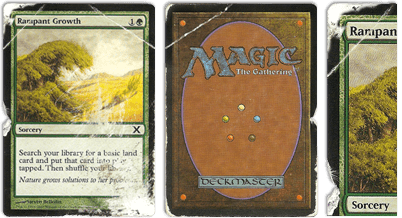
Heavily Played condition cards exhibit signs of heavy wear. Heavily Played condition cards may include cards that have significant creasing, folding, severe water damage, heavy whitening, heavy border wear, and /or tearing. '
'
'
'
Damaged (D)'
Damaged condition cards show obvious tears, bends, or creases that could make the card illegal for tournament play, even when sleeved. Damaged condition cards have massive border wear, possible writing or major inking (ex. white-bordered cards with black-markered front borders), massive corner wear, prevalent scratching, folds, creases or tears. '